Whether you’re charging a smartphone, transferring data between devices, or connecting peripherals to your computer, the quality of your cable can make a significant difference in terms of speed, durability, and reliability. Here are the key factors to consider when choosing an excellent cable:
- A good cable is made from high-quality materials that ensure durability and efficient data/power transmission. Look for cables with sturdy connectors (such as reinforced aluminum or durable plastic) and thick, well-insulated wiring (preferably copper) to minimize signal loss and wear over time.
2.Speed and Data Transfer Capability:
- The speed of data transfer or charging capability of a cable is determined by factors like its design, gauge (thickness of the wires), and the supported standards (e.g., USB 2.0, USB 3.0, USB-C). Choose cables that support the highest standards your devices are compatible with to maximize transfer speeds and charging efficiency.
- Consider the length of the cable based on your usage needs. Longer cables offer more flexibility but can sometimes lead to slower charging or data transfer speeds due to resistance. Ensure the cable is flexible enough to handle repeated bending without weakening or breaking.
- Ensure the cable is compatible with your devices and supports the necessary protocols (e.g., USB-A, USB-C, Lightning) for seamless connectivity and charging. Some cables may also feature compatibility with fast-charging technologies like Qualcomm Quick Charge or Power Delivery (PD).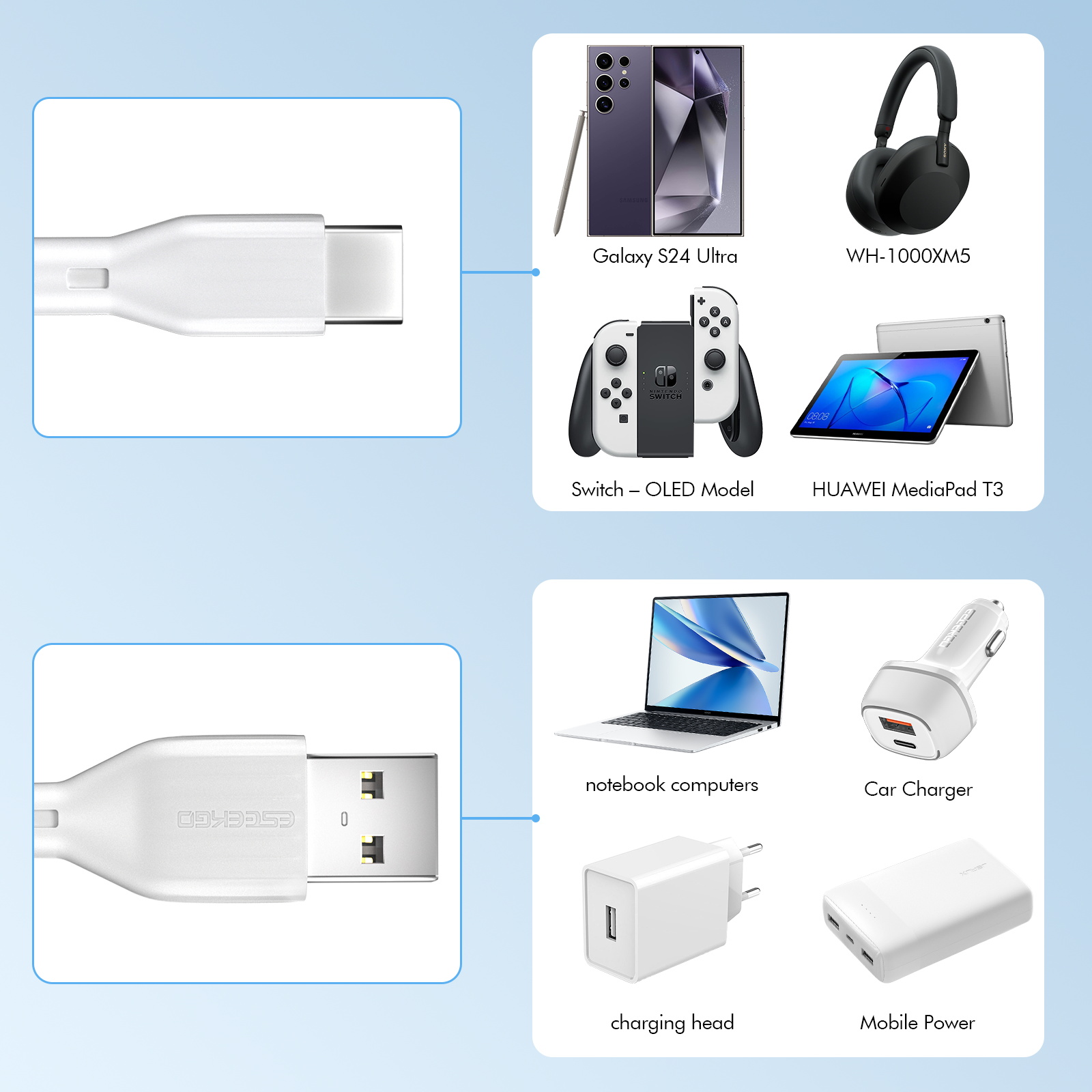
- Cables should be shielded to minimize electromagnetic interference (EMI) and radio frequency interference (RFI), which can affect data transmission quality. Look for cables with additional shielding layers or foil to maintain signal integrity.
- Choose cables that comply with industry standards and certifications (e.g., MFi certification for Apple devices, USB-IF certification for USB cables) to ensure they meet safety and performance requirements. These certifications indicate the cable has been tested for quality and reliability.
- Opt for cables from reputable brands known for their quality and customer support. Brands with a good reputation often offer warranties that cover defects or issues, providing peace of mind for your purchase.
- While budget is a consideration, prioritize value over the lowest price. Investing in a slightly more expensive, high-quality cable can save you money in the long run by reducing the need for frequent replacements and ensuring consistent performance.
9.Conclusion:
- Choosing an excellent cable involves assessing factors such as build quality, speed capabilities, compatibility, shielding, and brand reputation. By prioritizing these considerations, you can ensure that your cables deliver reliable performance, whether you’re charging devices, transferring data, or connecting peripherals. Invest in cables that match your specific needs and devices to optimize your connectivity experience.

